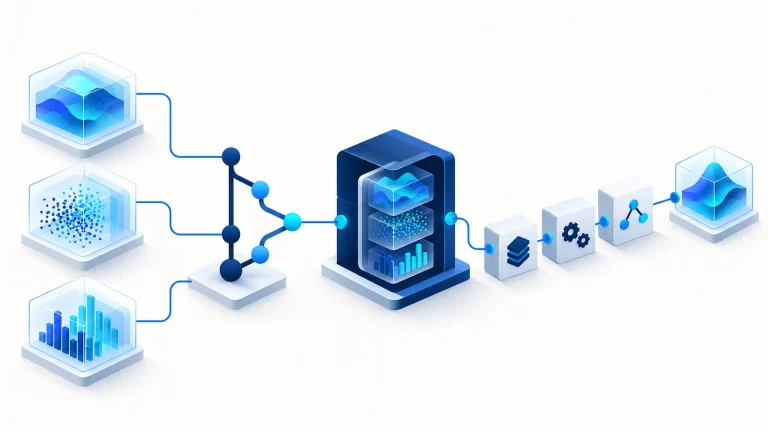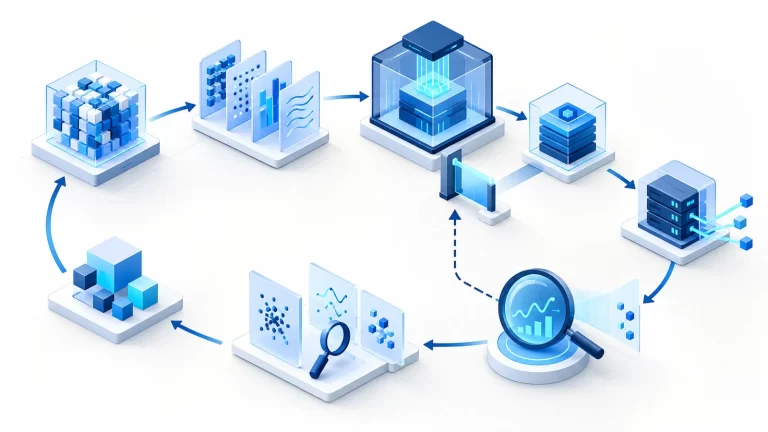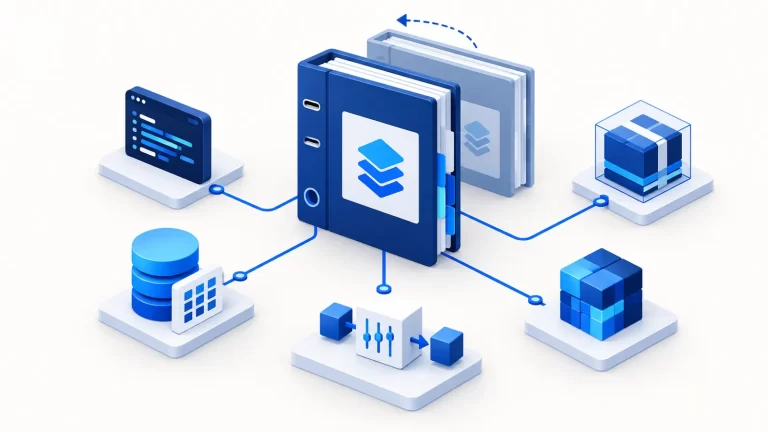
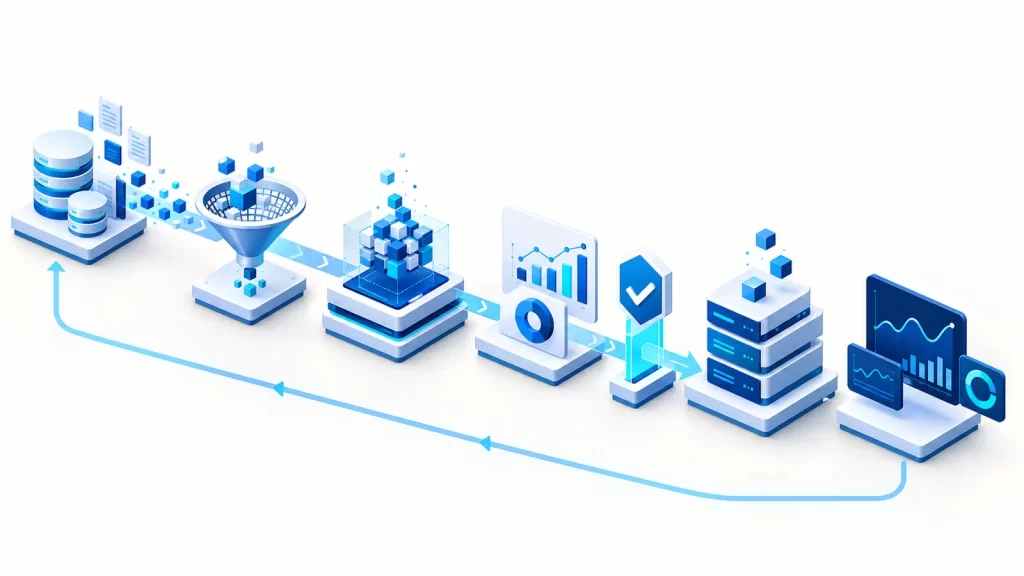
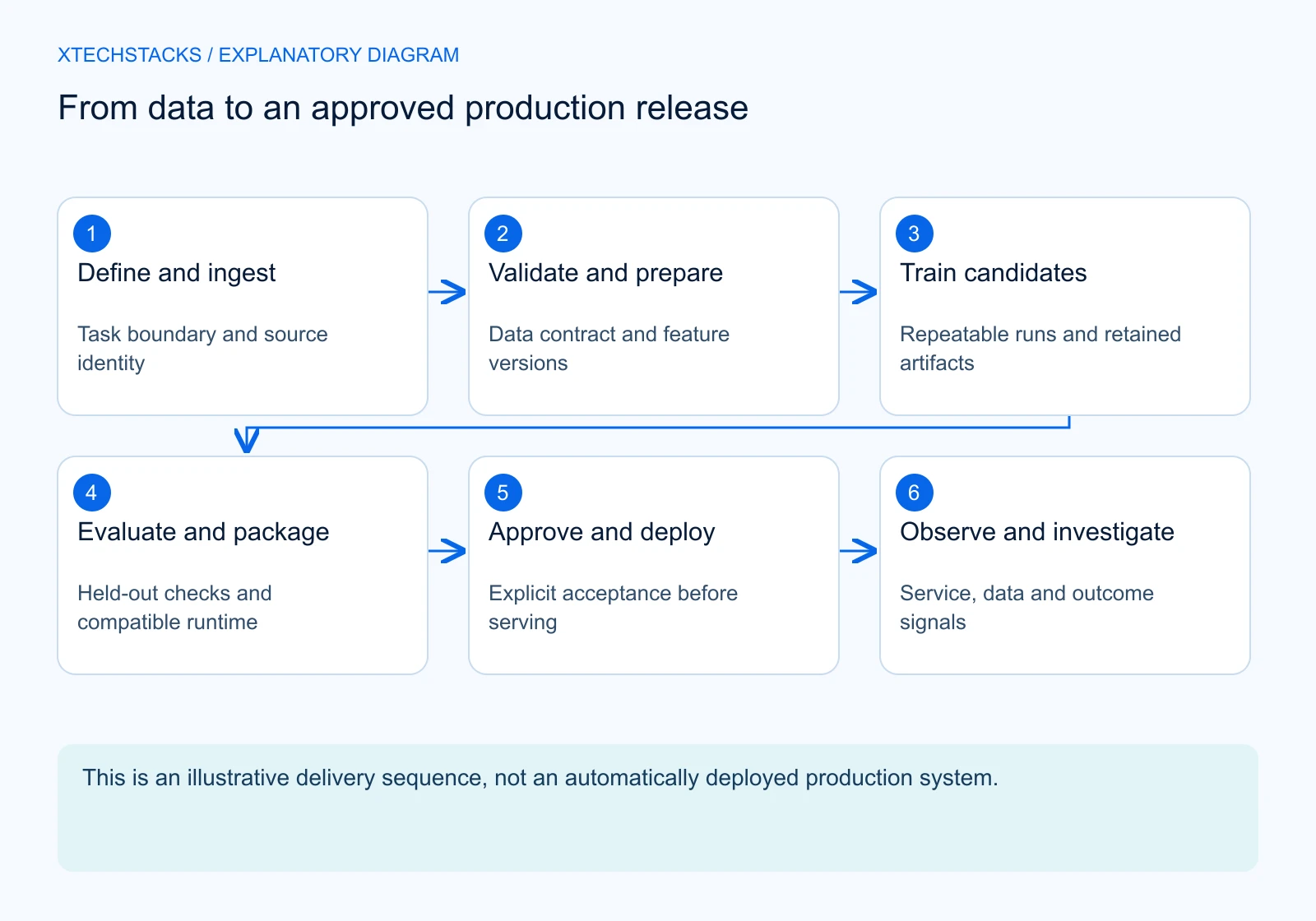
An end-to-end MLOps workflow should make a model release explainable from input capture to production response. The stages are familiar—prepare, train, evaluate, deploy and monitor—but the engineering value comes from the contracts between them. A successful training job is not evidence that those contracts are reliable.
This article takes a delivery-oriented view: what should each stage produce, what should the next stage verify and where should a pipeline stop? The aim is a recoverable operating system for one model, not a checklist of tools to purchase.
Define the task and its acceptance boundary
Start with the intended decision and the consequences of an incorrect prediction. Establish which inputs are available at inference time and what the output means to the consuming application. A useful acceptance definition includes model behavior, operational constraints and unsupported cases.
For a hypothetical demand forecast, overall error is only one dimension. The team may also need forecasts for specific stores, predictable completion before planning starts and a clear fallback when source data arrives late. Capture these requirements before building an automated training schedule.
Ingest, validate and curate data
Record source ownership, permitted use, collection windows and recoverable snapshot references. Validate schema and relevant content conditions at ingestion. Missing partitions, duplicate entities or a changed unit of measurement should fail visibly rather than flow into training unnoticed.
Curated data needs documented cleaning and transformation rules. Keep corrections traceable to the input and the reason for the change. Separate invalid data from a legitimate change in the population. A pipeline should not silently discard unusual records merely because they are inconvenient to a model.
Build features and prepare evaluation data
Feature preparation should use versioned logic and a documented schema. Test missing values, unseen categories, boundary timestamps and differences between batch and online execution. Record aggregation windows so the serving implementation does not accidentally use information unavailable when a decision was made.
Define training, validation and test boundaries around the problem. Time-based workloads often require time-aware evaluation; entity overlap can also leak information between splits. Preserve a representative evaluation set and record changes to it separately from changes to the training population.
Train candidates and retain evidence
Training should produce a model artifact, the run configuration, dependency information and evaluation outputs. Link these to code and data references. Record failed runs as well as successful ones when they help explain a decision. Avoid a workspace where only the final model remains and every intermediate assumption has disappeared.
Compare candidates against a baseline using consistent criteria. Inspect relevant segments and error types. More complex architectures introduce maintenance and serving costs that an aggregate metric does not capture. A simpler candidate can be preferable when its behavior is easier to evaluate and operate.
Package and approve the complete release
The serving package includes preprocessing, the model, runtime dependencies and configuration. Verify that the package can load the artifact and produce the documented output contract. Run invalid-input and compatibility checks in an environment that resembles the intended deployment.
An approval record should identify the candidate, evaluation evidence, reviewer and intended deployment. It should distinguish accepting an experiment from authorizing production exposure. Keep credentials out of artifacts and manifests, and ensure deployment identities have only the access they need.
Deploy according to the workload
Batch inference is appropriate when the consumer needs periodic results and can tolerate a defined completion window. Online serving is appropriate when an application needs immediate responses, but adds request validation, latency and availability concerns. Edge deployment creates another set of device and update constraints.
Where possible, compare a candidate through shadow or limited-exposure delivery before broad promotion. Define the rollback decision before rollout starts. Retain the prior compatible package, not just its model file, and account for source-schema changes that might prevent it from operating correctly.
Monitor and close the feedback loop
Observe service errors, latency, job completion and resource saturation. Separately assess prediction behavior, input distributions and outcomes when reliable labels become available. Document label delay and coverage; an immediately available proxy is not the same as measured accuracy.
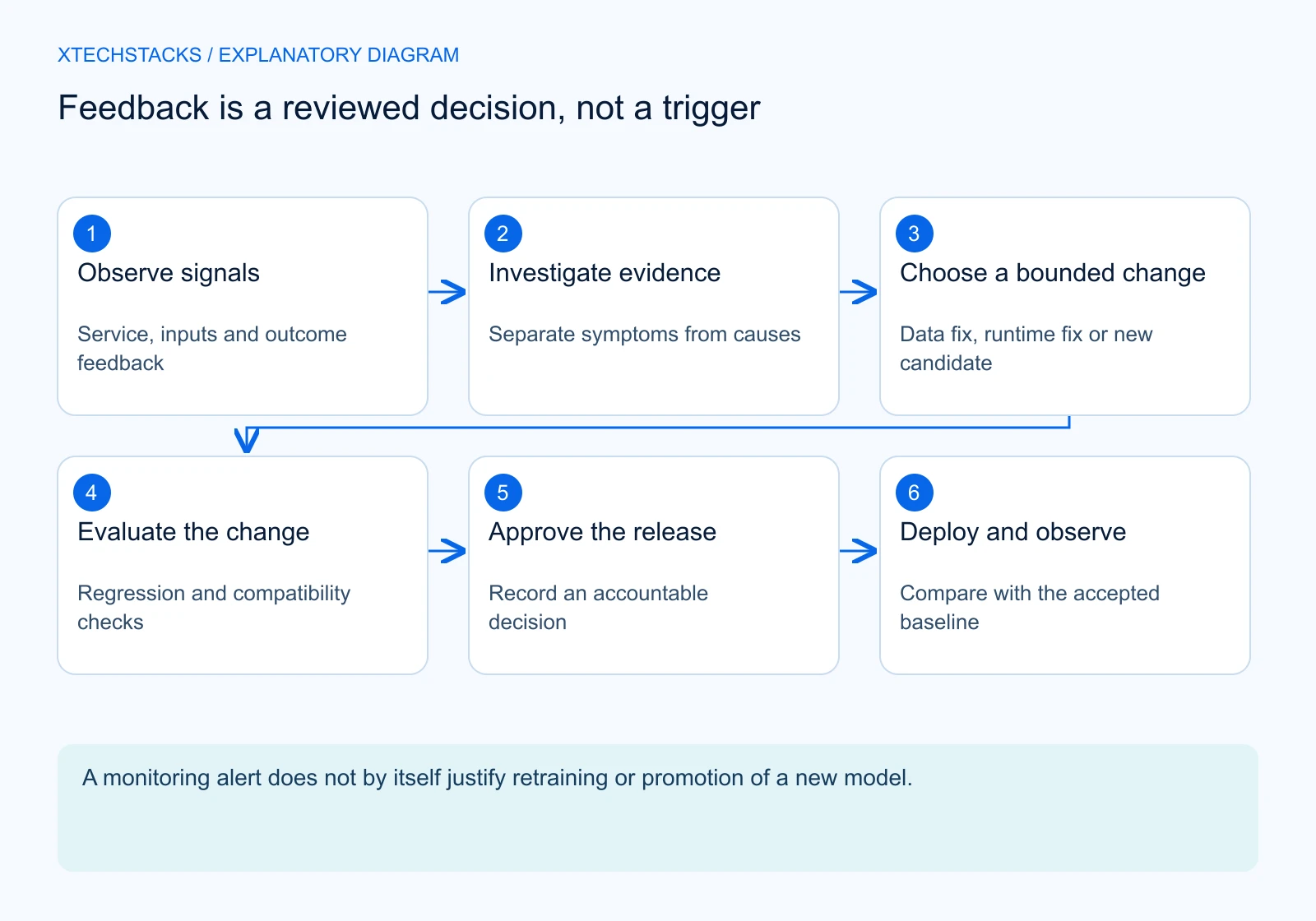
A drift alert should start investigation. Check ingestion, feature transformations and application behavior before deciding that retraining is necessary. Feedback incorporated into training must have appropriate permissions and quality checks. Continuous training creates candidates; it should not erase the release-approval boundary.
Implementation sequence and trade-offs
For the forecast example, first build one daily job with validated inputs, a versioned package and a reconciled output. Add a clean-workspace reproduction test and failure notifications to the responsible owner. Introduce automated candidate generation only after the manual decision process is clear.
Each additional platform component creates an integration and ownership obligation. A feature store, registry and workflow engine can be valuable, but should address identifiable requirements. Prefer connected records and tested recovery over a large stack whose failure boundaries are unclear.
Key takeaways
- Define acceptance criteria before automating the lifecycle.
- Make every stage’s output and failure behavior explicit.
- Approve and recover a complete serving package.
- Use monitoring to guide investigation and controlled improvement.