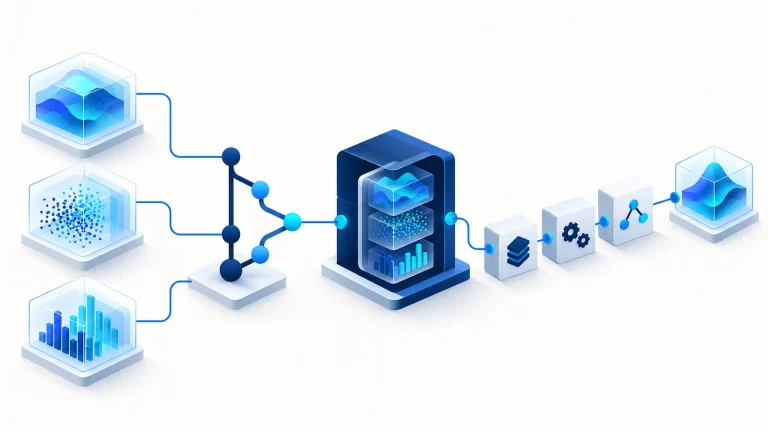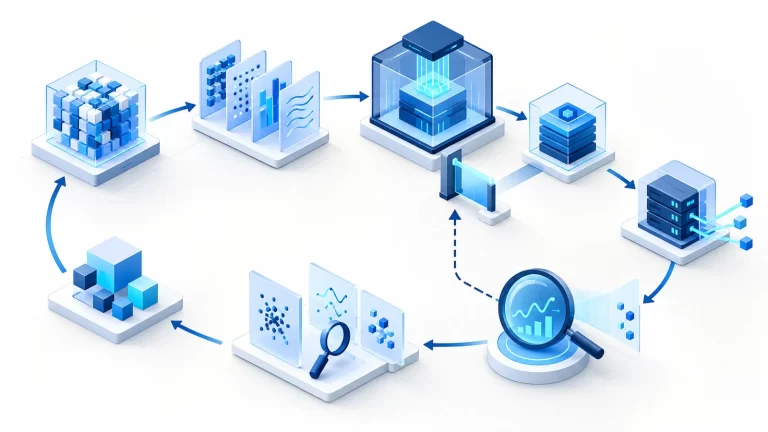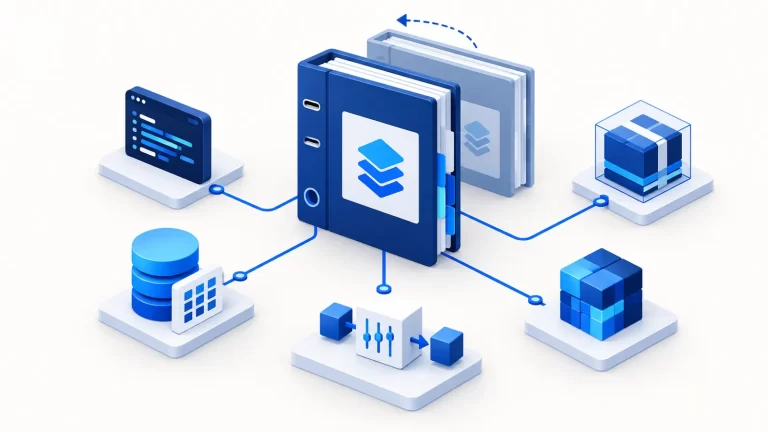
DevOps, MLOps and LLMOps share an emphasis on repeatable delivery and operational feedback. Their controls differ because software, learned models and language-model applications have different failure modes.
DevOps
DevOps connects development and operations through collaboration, automation and delivery practices. It is not limited to migrating legacy applications to cloud infrastructure.
MLOps
MLOps adds data validation, experiment tracking, model evaluation and production model monitoring. A release must connect the model artifact with the data, code and configuration that produced it.
LLMOps
LLM applications also require prompt and retrieval versioning, task-specific evaluation and monitoring of cost, latency and output quality. Using a hosted model is different from training a foundation model; fine-tuning or running a small model is not equivalent to training a large model from scratch.
Deployment patterns
- Batch: run a defined job and record its inputs and outputs.
- API: serve requests through an authenticated application interface.
- Event-driven: process queued work with retry and capacity controls.
- Embedded: integrate a suitable runtime into another application.
Evaluation and security
Use representative offline tests as well as controlled production feedback. A/B testing alone does not establish safety or correctness. Review data permissions, retention, prompt injection and tool access. Open-source deployment does not make a system automatically secure, and operational practices cannot guarantee that a model never produces an incorrect answer.
Three operating models, one delivery foundation
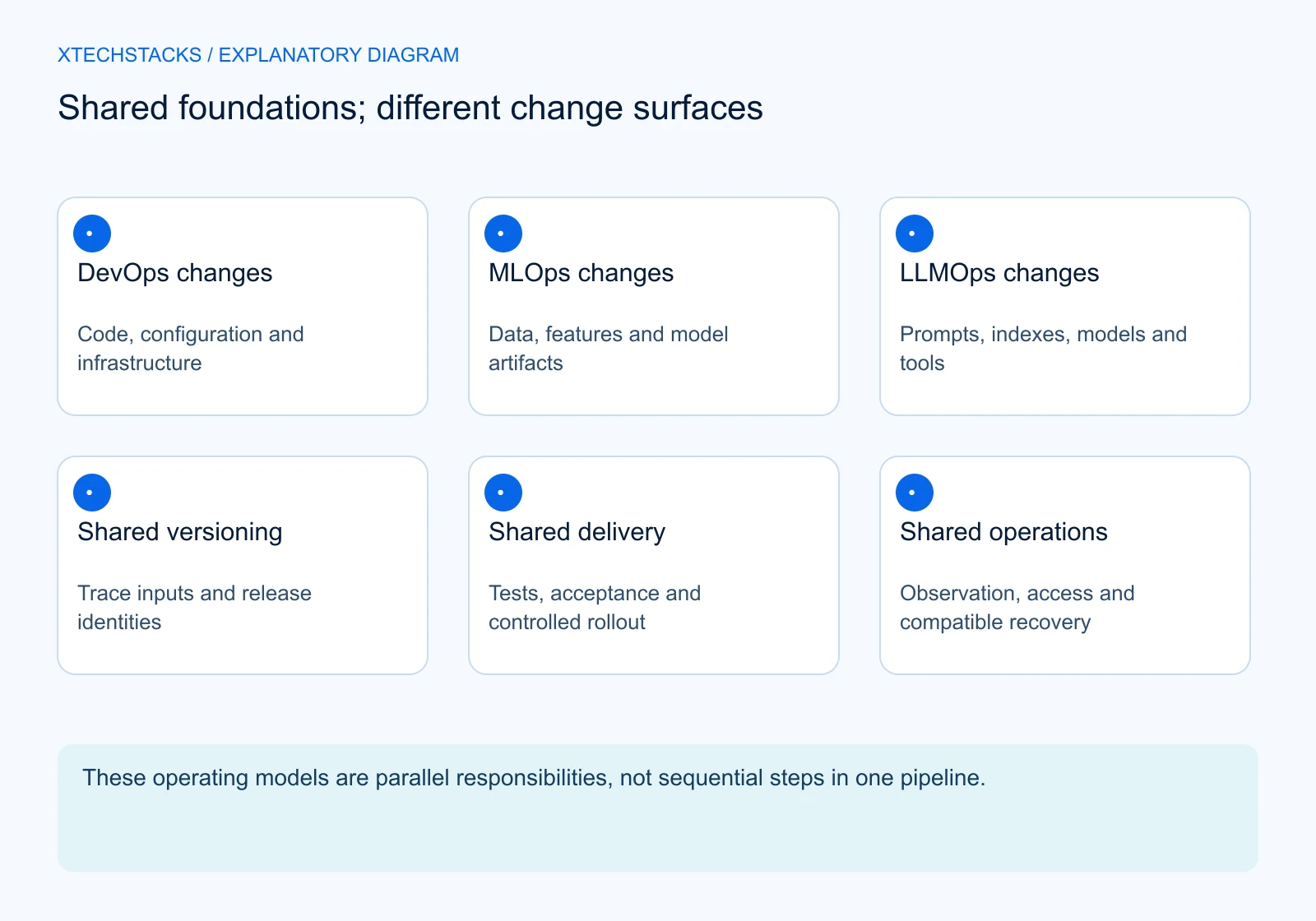
DevOps, MLOps and LLMOps share version control, testing, deployment, observability and accountable operations. Their release units differ. Ordinary software centers on code and configuration; predictive models add training evidence; LLM applications add prompts, retrieval and provider behavior.
Use those differences to design controls rather than creating three unrelated platforms. A shared delivery system can retain common infrastructure while adding evaluation and lineage appropriate to each workload. Consistency should not erase the distinctions that matter.
Compare what can change
A software release changes executable logic or configuration. A predictive-model release may change data, features and learned artifacts. An LLM application can change substantially through a prompt or document-index update even when its application code and model endpoint stay the same.
Record the complete release identity for each type. A single Git commit is useful but may not identify external artifacts or mutable provider configuration. Make those references explicit so an incident can be related to what actually operated.
Evaluation boundaries
Software tests check defined behavior and integration contracts. Model evaluation assesses task performance on representative data and relevant segments. LLM evaluation also examines grounding, unsupported requests, tool behavior and retrieval quality where those capabilities exist.
Separate a test’s execution success from its acceptance decision. A completed training run or a valid JSON response does not prove acceptable behavior. Define thresholds and review conditions around the intended use rather than copying a generic pipeline template.
A practical shared platform
Consider a hypothetical platform supporting an internal API, a batch classifier and a documentation assistant. All three use reviewed source changes, protected identities and identifiable deployment artifacts. The classifier additionally records training and evaluation snapshots; the assistant records prompt and index revisions.
Operators can use shared logging and delivery conventions while retaining workload-specific checks. A classifier drift concern and an assistant citation failure need different investigations from an API timeout. The platform should preserve these distinctions in its telemetry and ownership model.
Automation and approvals
Continuous integration verifies changes, and delivery moves approved packages through environments. Automated training produces candidates. Agent or tool execution may propose actions with external side effects. Each capability needs an appropriate promotion or approval boundary.
Avoid assuming that more automation requires less accountability. The automated system should identify the evidence, operation and owner. Consequential actions need permissions enforced outside model instructions, and retries need a design that does not duplicate effects.
Recovery strategies
Software recovery may restore an earlier compatible package. Model recovery must consider feature and data-contract compatibility. LLM recovery may need to restore a prompt or index, disable a tool or limit a failing source rather than merely change the model.
Test recovery around the current environment. A previous artifact may no longer work with a changed upstream schema. Retain a bounded fallback for conditions where restoring an old release does not restore its original assumptions.
Trade-offs and recommended approach
Shared services reduce duplication but can become a bottleneck if they force every workload into the same semantics. Workload-specific tools can add useful capabilities while increasing integration and maintenance. Document the authoritative records and gaps between systems.
Start with one common release record and explicit extensions for model or LLM dependencies. Assign operational owners and exercise one failure path for each workload. Architecture is credible when it explains differences and recovery, not when it groups all systems under a fashionable label.
Key takeaways
- Reuse delivery foundations without hiding workload differences.
- Record data, artifacts, prompts and indexes where relevant.
- Distinguish execution from approval.
- Recover the failing boundary, not just the visible model.