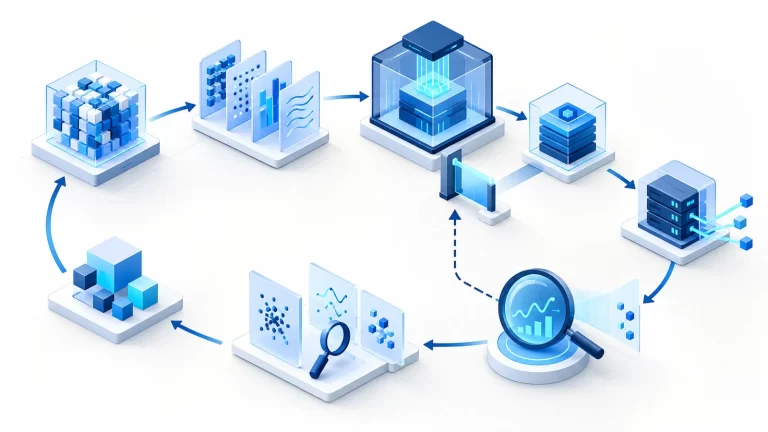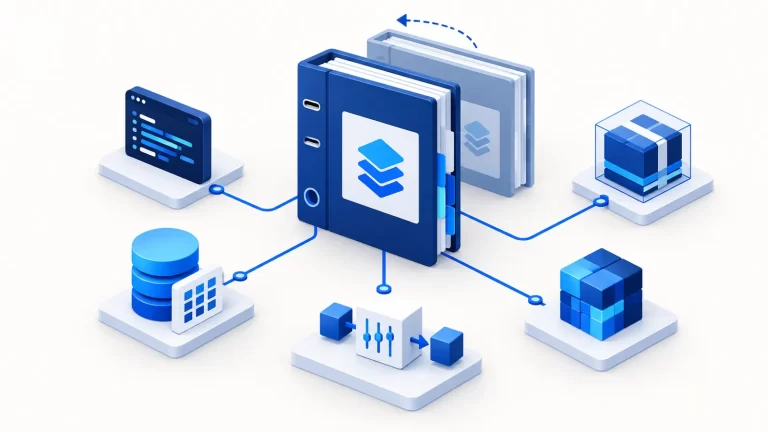
The original project describes a configurable chatbot built with LangChain and Llama 2. Its architecture can be adapted to different information sources, but suitability must be evaluated for each domain.
Retrieval-augmented generation
RAG means retrieval-augmented generation. The application retrieves relevant material and supplies it as context for a generated response. Retrieval can improve grounding, but does not guarantee accuracy or completeness.
Configure the domain
- Define approved sources and their access permissions.
- Choose how documents are prepared, indexed and retrieved.
- Set boundaries for questions and actions the chatbot supports.
- Evaluate representative queries and missing-information cases.
Model and application limits
A model does not automatically learn a new domain from every conversation. Knowledge updates, prompt changes and model changes need explicit processes and testing. Check the chosen model’s license and deployment requirements.
Human review
Keep escalation and review for consequential responses. Do not treat the example as a validated medical tool or a substitute for qualified professional judgment. Retail, education and health-related deployments require different evaluation and safeguards.
Project reference
An implementation example is atulX7/ChatBot. Review the repository’s current code and dependencies before using it; this article is not runtime certification. For the retrieval pattern, consult the LangChain retrieval documentation.
Configuration is not universal suitability
A chatbot can expose configurable prompts, retrieval sources and interface settings. That does not make it suitable for every domain. Each intended task needs its own evidence, access controls, failure behavior and review requirements.
A hypothetical internal handbook assistant and a clinical assistant have fundamentally different consequences and validation needs. Do not infer safety or effectiveness from the ability to load a different document collection. The repository reference is an implementation example, not certification of a medical or production-ready service.
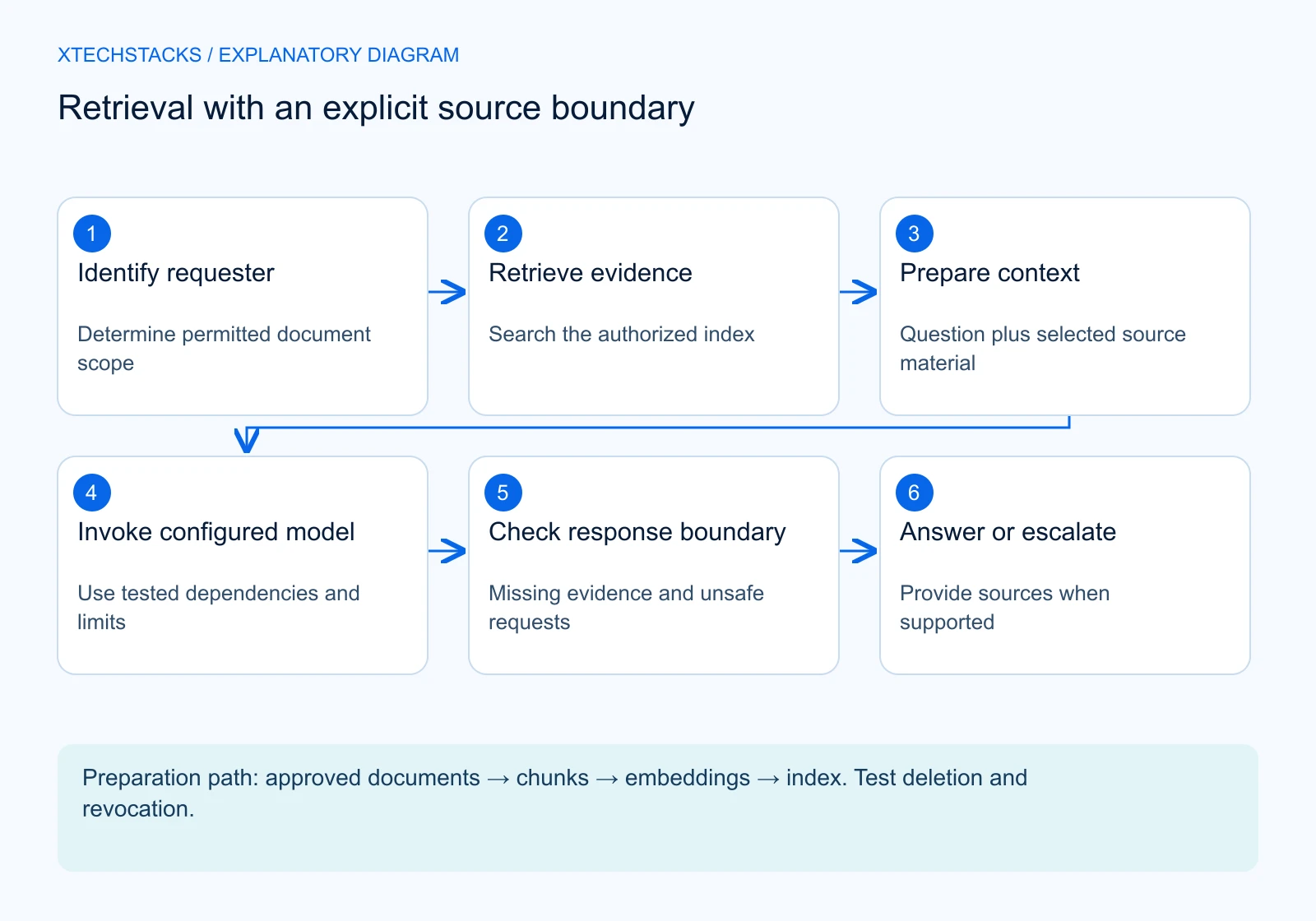
A retrieval-based request path
Prepare approved documents, create chunks and store searchable representations with stable source identities. At query time, establish the user’s permissions before selecting material. Prepare the question and selected passages for the configured model, then return an answer with usable source references.
The application should identify insufficient evidence. A fluent response can conceal failed retrieval, so inspect the selected passages as well as the generated answer. Keep the retrieval configuration and index identity in release records.
Model and dependency choices
Llama 2 in the original example identifies a model family used by that project; it should not be presented as the current default for every new system. Review the intended model’s license, deployment requirements and suitability for the actual task.
LangChain can help compose application steps, but adds dependency compatibility obligations. Pin supported versions and test integration changes. A project’s successful historical example does not prove that unchanged commands will execute correctly in a newer environment.
Document lifecycle and isolation
Define how documents are added, corrected, revoked and deleted. Permission changes must affect query results, not only the ingestion interface. A tenant or department label in a prompt is not sufficient isolation if the retrieval service can return another group’s documents.
Test with users who have different access rights and with removed sources. Keep sensitive content out of unnecessary logs. Decide whether retained conversations can reveal document contents after access has changed.
Evaluation cases
Build a reviewed set of representative questions, unsupported requests, conflicting passages and adversarial instructions embedded in documents. Evaluate answer grounding, source relevance and appropriate refusal or escalation. Automatic grading can assist review but should have documented limitations.
For the handbook example, include an outdated policy, an absent policy and an unauthorized document. Verify that the application does not replace these failures with invented guidance. Test end-to-end behavior through the interface, not only the retrieval function in isolation.
Tools and consequential actions
If the chatbot can call APIs, keep available operations narrowly scoped. Validate generated arguments and require suitable approval for consequential changes. Retrieved text should be treated as evidence, not as authority to change the application’s operating rules.
Define timeout and retry behavior for model and tool requests. A tool call may have completed even if its response was lost. Check destination state or use an idempotent operation instead of blindly repeating an action.
Operating trade-offs
Local model operation gives the team more runtime control but adds hardware, maintenance and serving obligations. Managed APIs shift some infrastructure work to a provider but introduce service and data-transmission boundaries. Evaluate the full system rather than comparing only model access prices.
Begin with one bounded, non-consequential information task and a reviewed knowledge set. Establish evaluation and incident handling before broadening scope. A credible configurable chatbot is one whose limits are explicit, not one described as universally capable.
Key takeaways
- Validate each domain rather than assuming configuration is enough.
- Enforce document permissions in retrieval and application code.
- Evaluate missing and conflicting evidence.
- Separate answers from authorized external actions.
Validate the source boundary
A useful acceptance check removes one previously searchable document, refreshes the index and repeats a question that depended on it. Verify both retrieval and conversation history behavior for an authorized test account. If the assistant continues exposing the deleted source, investigate the index, retained context and cache boundaries before expanding the knowledge collection.