A model can be served without errors while making increasingly unsuitable predictions. Conversely, an infrastructure incident can produce missing or delayed outputs without changing the model’s learned behavior. Monitoring needs to distinguish those situations so the response addresses the actual failure.
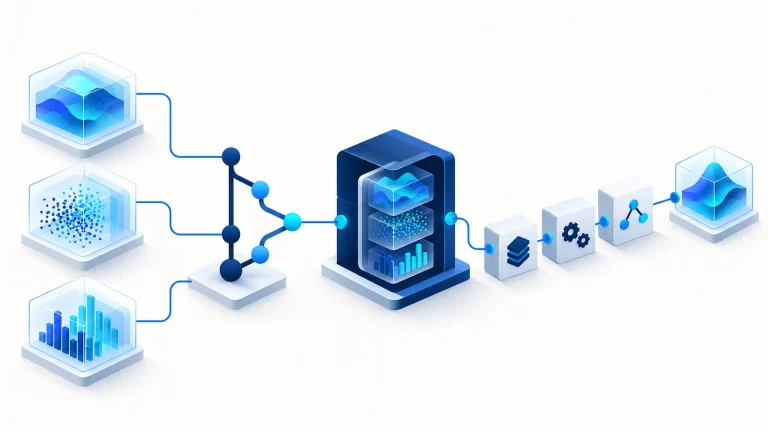
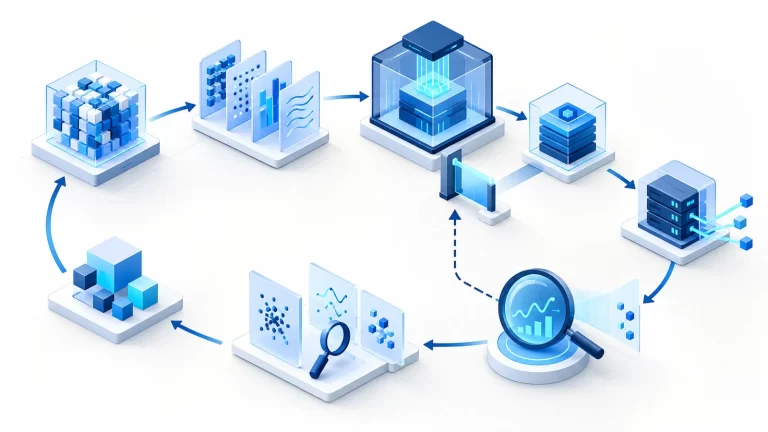
A useful MLOps monitoring design connects service signals, data-contract checks, prediction behavior and reliable outcomes. Feedback closes the loop only when the team understands what it represents, how it was collected and which release produced the result.
Separate service health from model quality
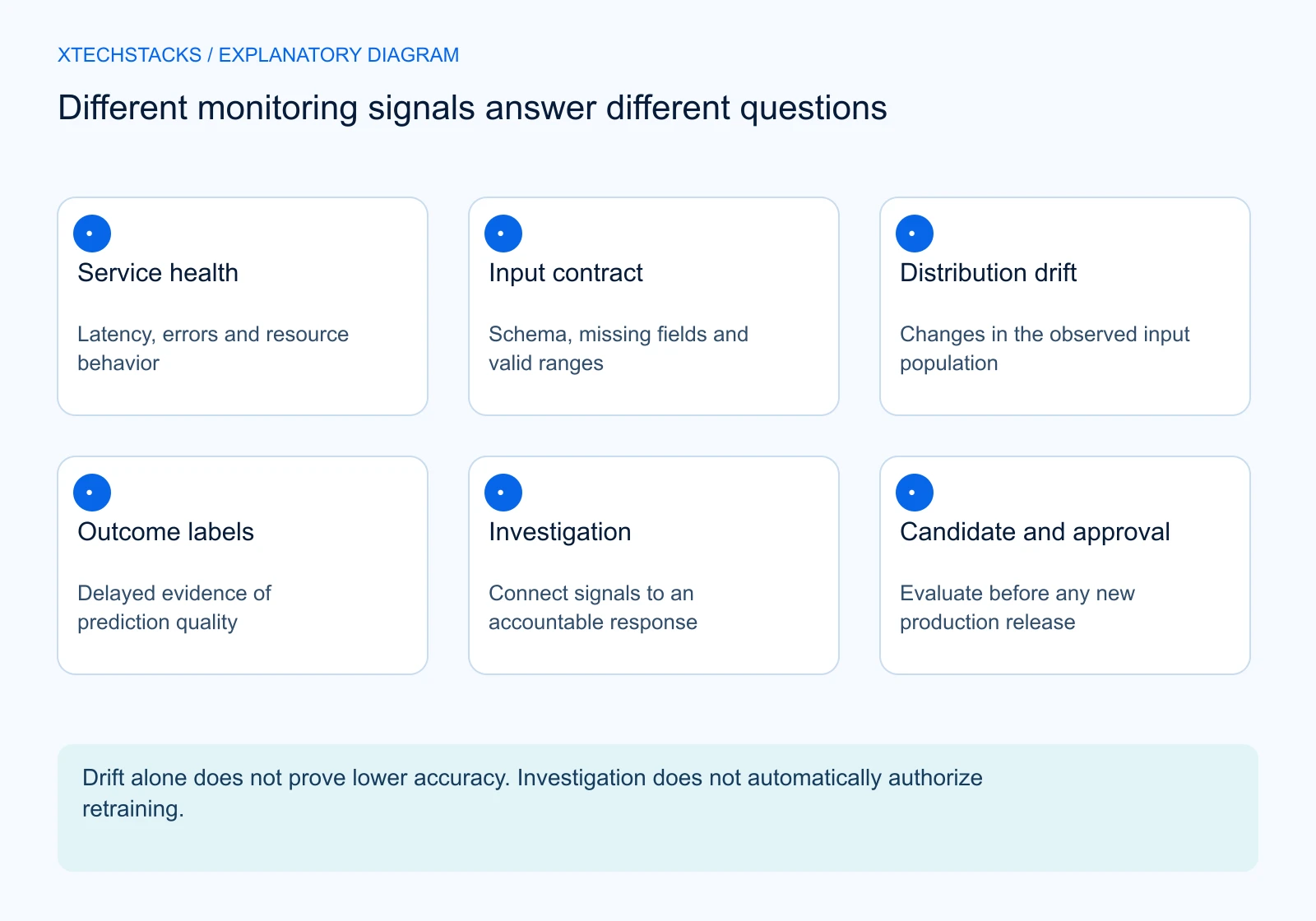
Service monitoring tracks request failures, latency, resource saturation and batch completion. These signals help operators maintain delivery. Model-quality monitoring asks whether predictions remain suitable for the task, including relevant segments and unsupported cases.
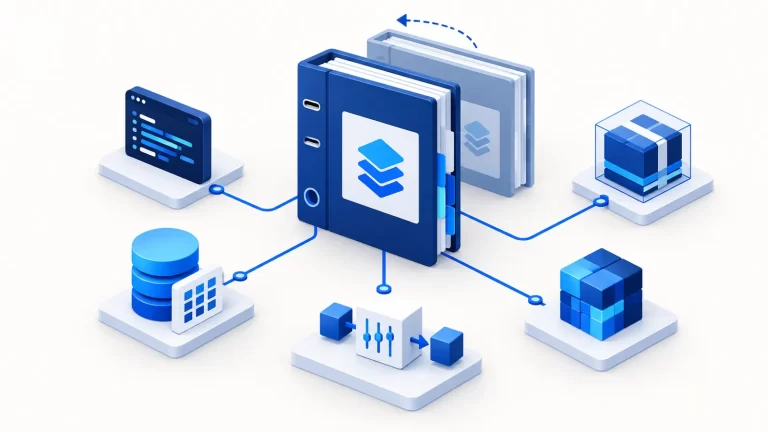
Neither category substitutes for the other. A fast response may still be wrong; an accurate model may be unavailable to its consumer. Define owners and response paths for both, and retain the deployed artifact identity in operational records so investigations do not mix signals from different releases.
Monitor the input contract
Check schemas, missing values, units, categorical values and data freshness at the serving boundary. For batch processing, verify partition completeness and reconcile input and output counts. For online systems, reject invalid requests predictably rather than allowing preprocessing failures to become unexplained prediction changes.
Compare training and serving transformations. A change to a source field, time window or missing-value rule can create skew even when distributions appear plausible. Contract checks are often more actionable than a broad drift dashboard because they identify a specific violated assumption.
Interpret drift carefully
Drift monitoring describes changes in observed data or prediction distributions. A changed distribution may be expected after a product launch, a seasonal shift or a new source. It may also indicate an ingestion defect. An alert does not establish which explanation is correct or prove that measured accuracy declined.
Choose features and segments that matter to the decision. Document the baseline window, comparison method and conditions for investigation. Avoid treating every statistical difference as an incident. A monitoring system that generates unowned, noisy alerts makes meaningful changes harder to notice.
Labels and outcome feedback
Some outcomes arrive immediately; others take days or months. Record label delay, coverage and selection effects. If only a subset of users reports mistakes, those reports are valuable incident evidence but may not represent the overall population.
Link outcomes to the original prediction, input context and model release where permitted. Protect sensitive information and define retention. Human corrections also need review: an operational override may reflect an exception, a different business rule or a labeling mistake rather than a universally better target.
A hypothetical routing incident
Consider a support-ticket classifier whose misroutes increase for one intake channel. The API remains available and overall class proportions look stable. A source-system update stopped providing a field used during preprocessing. The serving code replaced it with a default that changed that channel’s predictions.
The response is to verify the source contract, compare affected examples against the previous compatible package and restore an acceptable operating path. Retraining immediately would risk learning around a preventable ingestion defect. This scenario is illustrative, not a claim about an implemented customer system.
Design alerts around a response
An alert should identify its owner, relevant release, affected scope and first diagnostic checks. Include the condition and its observation window rather than a vague “model degraded” message. Connect service incidents to operational response and quality concerns to an evaluation process.
Use severity according to consequences. A missing daily output, a widespread invalid-input condition and a small distribution shift do not require the same response. Review alert usefulness after incidents, and retire signals that do not support a decision.
Retraining and release controls
Monitoring can trigger investigation or candidate generation. It should not automatically approve a replacement. Verify the training inputs, compare the candidate against the fixed evaluation procedure and inspect the affected segment before promotion.
Keep the approved package available while evaluation proceeds. If immediate recovery is needed, use a tested rollback or documented fallback. Capture the decision and the evidence that justified it. Continuous training and continuous delivery are different controls, even when both are automated.
Implementation sequence and trade-offs
Start with release identity, service health and high-value contract checks. Add prediction distributions and reliable outcome tracking where the use case supports them. Introduce drift methods only when someone can explain the baseline and act on the signal.
More detailed telemetry increases storage, privacy and analysis costs. Collect what is needed to diagnose behavior without retaining every sensitive input indefinitely. Sampling may be appropriate, but record its limitations. Monitoring should provide evidence that supports an operating decision, not merely a larger dashboard.
Key takeaways
- Monitor delivery, data contracts and prediction behavior separately.
- Document label delay and feedback limitations.
- Investigate drift before choosing a corrective action.
- Promote retrained candidates only after explicit evaluation.